

SAAG ARTS WRITING PRIZE
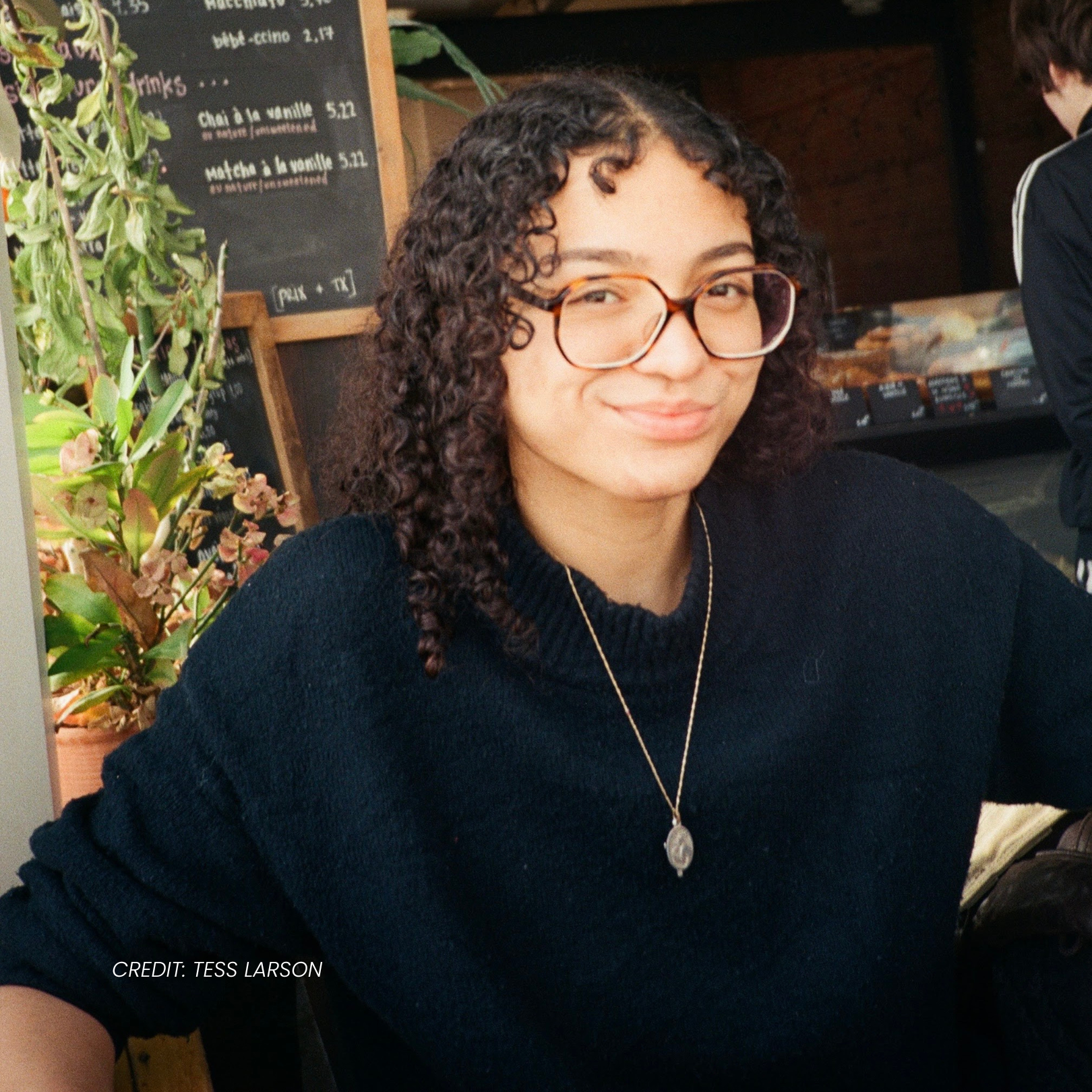
2026 ARTS WRITING AWARD | WINNER
TESS LARSEN
“Sink, Swim or Sunder”
Tess Larsen is an artist and emerging writer based in Moh'kinstis/Calgary and Tiohtià:ke/Montréal. Her practice in theatre and performing arts is deeply intertwined with her passion for visualizing radical avenues of embodiment and subjectivity. In their study of Art History at Concordia University, their academic work explores memory and archival practices, representations of the Black female subject, and the exigency of remembering the fleshy materiality of the body.
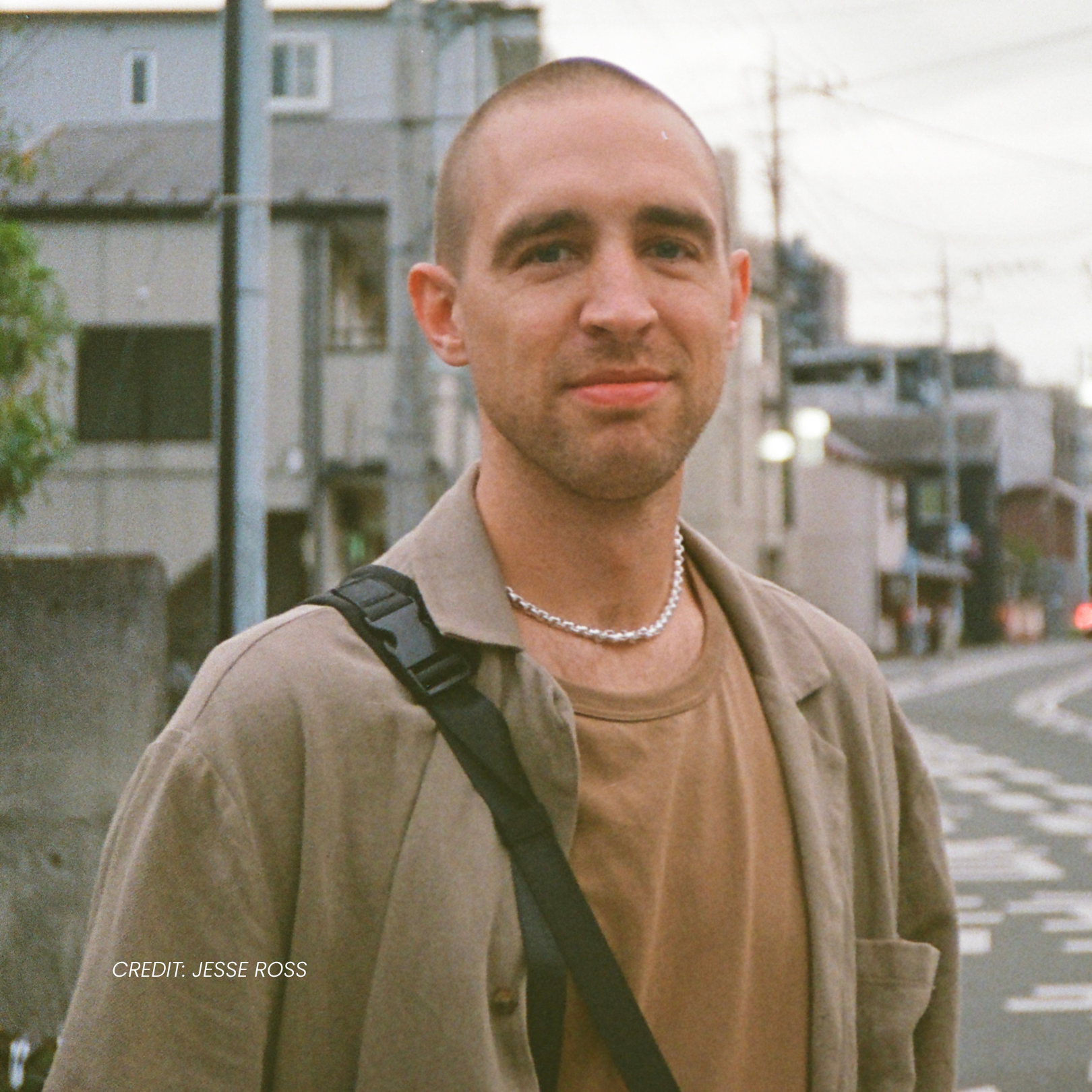
2026 ARTS WRITING AWARD | RUNNER-UP
JESSE ROSS
“A True Hallucination”
Jesse Ross is a writer and visual artist based in Vancouver, Canada, on the traditional, ancestral, and unceded territory of the Musqueam (xʷməθkʷəy̓əm), Squamish (Sḵwx̱wú7mesh), and Tsleil-Waututh (səlil̓wətaʔɬ) Nations. His practice deals with embodied knowledge and indeterminacy as a means of transformation. Ross received his MFA in Visual Art from the University of British Columbia and has been the recipient of the SSHRC Graduate scholarship, Canada Council Grant and will be participating in a Centrum Emerging Artist Residency this fall.
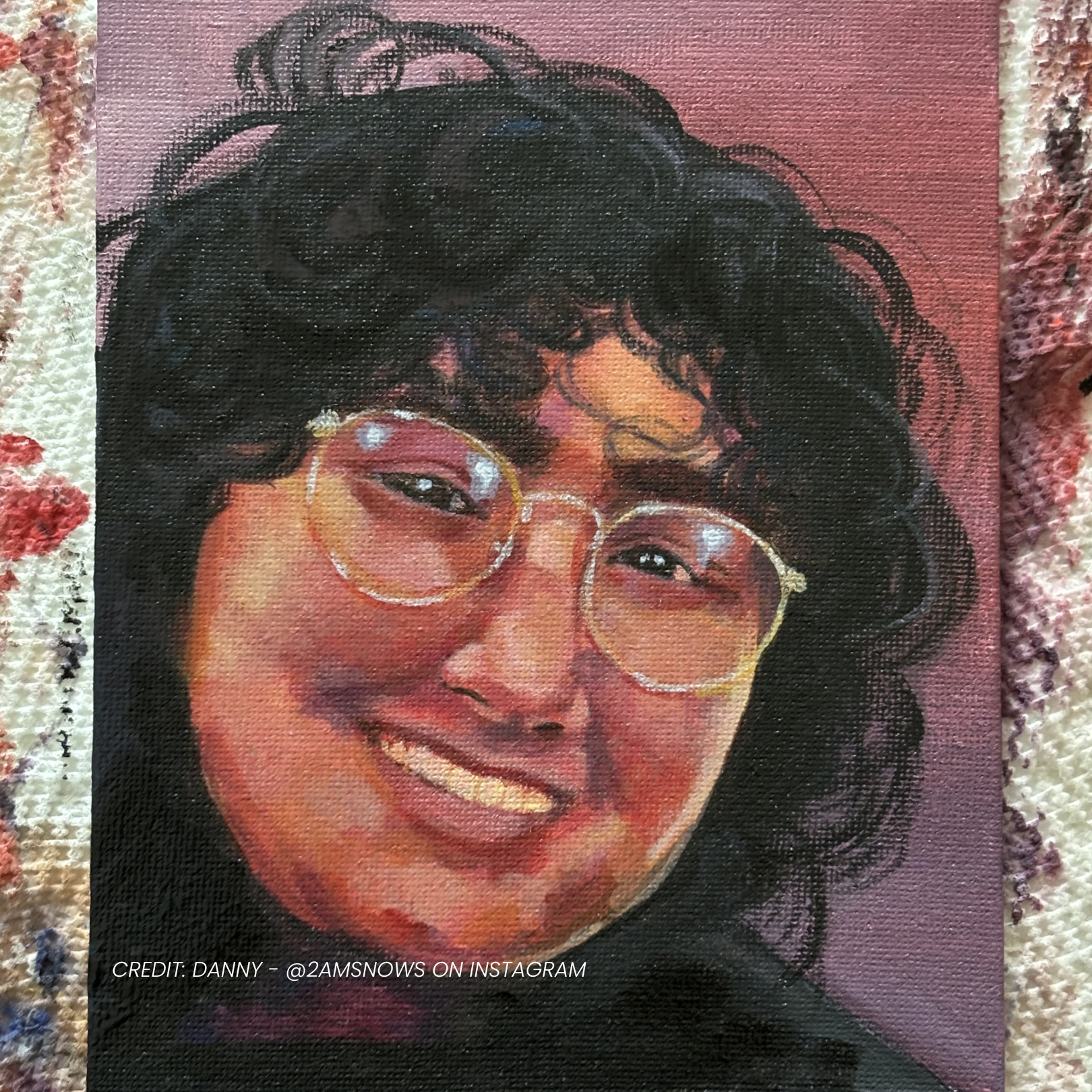
2026 ARUNA D’SOUZA AWARD | WINNER
F.M. ROSEY
“Greyscale Wards, Saturated Dreams”
F.M. Rosey studied mathematics at the University of British Columbia. Her work recently won first place in the creative nonfiction category of the North Shore Writers' Association's 30th annual writing contest.
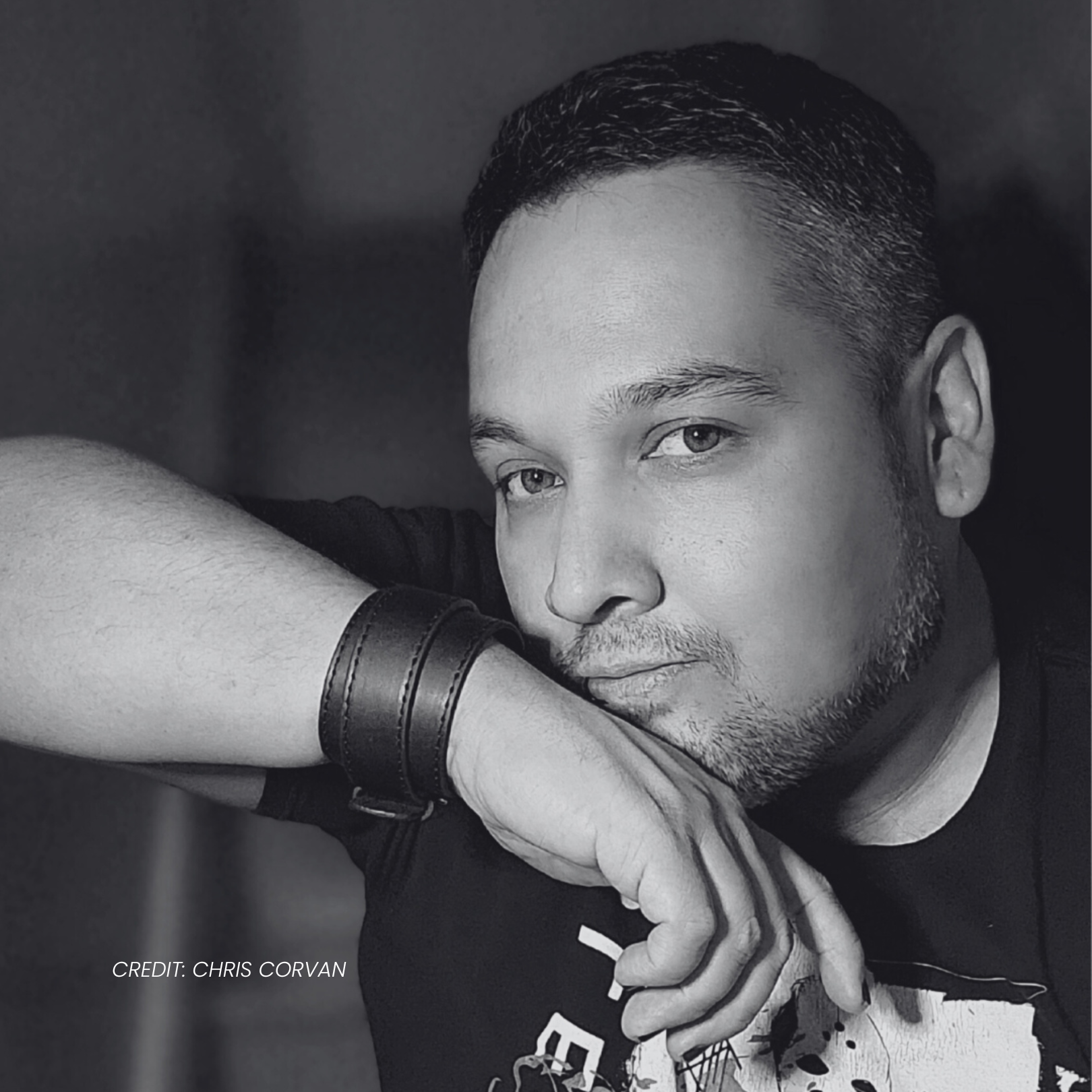
2026 ARUNA D’SOUZA AWARD | RUNNER-UP
CHRIS CORVAN
“When the Grid Breaks”
Chris Corvan is a Nakoda writer and member of White Bear First Nation, currently based in Calgary, Alberta. His work explores liminal spaces, repetition, and the tension between structure and rupture within contemporary environments. Influenced by horror and speculative storytelling, he examines how architecture, landscape, and light shape emotional experience. His writing blends narrative instinct with critical reflection, seeking meaning in what is withheld as much as what is visible.
The Southern Alberta Art Gallery Maansiksikaitsitapiitsinikssin is excited to announce the 15th annual SAAG Arts Writing Prize. This prize aims to recognize and support emerging writers whose writing relates to the field of contemporary art. Art writing is essential to supporting a healthy art ecosystem, providing access points for contemporary art practice, engaging different voices in the field, and encouraging and developing discourse in the arts.
Writers can be considered for one or both of this year’s categories: 1) Arts Writing and 2) the Aruna D’Souza Award for BIPOC Writers. The requirements and prizes for each category are listed below. All entries are eligible to be included in the digital SAAG Arts Writing Prize Reader 2026, which will be shared on the Gallery’s website and sent out to all contributors via email.
This prize focuses on submissions of writing about contemporary art. This includes but is not limited to: exhibition reviews, critical essays, ekphrasis, etc. We will also consider experimental and innovative approaches to writing about contemporary art, including poetry, prose, creative fiction, etc.
CATEGORIES & PRIZES
ARTS WRITING
Winner: $1000.00 CAD cash prize, the opportunity for a paid public program ($391.00CAD) with the Gallery, and the opportunity for an arts writing mentorship.
Runner-up: $250.00 CAD cash prize, and the opportunity for an arts writing mentorship.
ARUNA D’SOUZA (BIPOC)
Winner: $1000.00 CAD cash prize, the opportunity for a paid public program ($391.00CAD) the Gallery, and the opportunity for an arts writing mentorship.
Runner-up: $250.00 CAD cash prize, and the opportunity for an arts writing mentorship
Please see the FAQ for more details about the awards.
ELIGIBILITY
Writers must be at least 18 years of age at the time of entry. The competition is open to anyone residing in Canada, regardless of citizenship status, and to Canadians living abroad.
For the purposes of the award, an emerging writer is defined as anyone who has not published more than one piece of art writing in a recognized print or online publication, exclusive of student-run journals and magazines, as well as self-published works. Applicants may be asked to provide evidence of publication history upon request (i.e. website, CV, resume).
Applicants may submit one piece of writing for consideration. Submissions are limited to 1000 words. Participants may be considered for both awards depending on their eligibility. Applicants must identify which awards they would like to be considered for. All submissions must be original and previously unpublished, inclusive of online publications.
JURY
The SAAG Arts Writing Prize and Aruna D’Souza Award is assessed by a peer jury of arts writing professionals. Stay tuned for the announcement of our 2026 jurors.
The Arts Writing Prize and Aruna D’Souza Award will be assessed based on the following criteria:
Artistic Impact (30%): The submitted piece of writing is effective and interesting. The submitted piece of writing demonstrates a new and exciting contribution to the field of art writing.
Connection to art (30%): The submitted piece of writing provides a unique and insightful perspective on contemporary art, art history, and/or artistic practice.
Originality (20%): The submitted piece of writing shows imagination, creativity, and individuality. The submitted piece of writing demonstrates a unique perspective.
Technical excellence (20%): The writer demonstrates a high level of skill in their craft, and rigor and intentionality in their chosen format.
Past Arts Writing Prize Readers
The Southern Alberta Art Gallery Maansiksikaitsitapiitsinikssin’s annual SAAG Arts Writing Prize recognizes and supports emerging writers whose writing relates to the field of contemporary art. Art writing is essential to supporting a healthy art ecosystem, providing access points for contemporary art practice, engaging different voices in the field, and encouraging and developing discourse in the arts.
Writers can be considered for one or both of this year’s categories: 1) Arts Writing and 2) the Aruna D’Souza Award for BIPOC Writers. The requirements and prizes for each category are listed below. All entries are eligible to be published in the 2025 SAAG Arts Writing Prize Reader, made in-house at the Gallery’s Tiny Press. All applicants will be provided with a complimentary copy of the Reader.
This prize focuses on submissions of writing about contemporary art. This includes but is not limited to: exhibition reviews, critical essays, ekphrasis, etc. We will also consider experimental and innovative approaches to writing about contemporary art, including poetry, prose, creative fiction, etc.
2025 ARTS WRITING PRIZE WINNER: KAYA PANTHIER
Though her heart resides in Portsmouth, Dominica, Kaya Panthier currently lives and works in Sackville, New Brunswick.
Primarily a painter, Panthier’s work reimagines the landscape of the tropics as one which conceals, protects, and houses spirit. Through a study of incalescence, revolt, exalt, and haunting on the island of Dominica, her current practice blends a reverence for personal legend with an interest in Caribbean folktales.
Her art and writing embodies portrayals of familial relationships, explorations of intergenerational wisdom, and studies in grief. In acknowledgment of the cycles of life and death that permeate every aspect of existence, Panthier draws inspiration from the island’s volcanic origins as a powerful energetic source. These concepts are embedded within her paintings through the use of fluorescent grounds, which give the sense that both flesh and flora are energetically charged by the heat that birthed them.
2025 ARTS WRITING PRIZE RUNNER UP: FRANÇOIS BOUVIER
Originally from Gatineau, François has practiced acrobatics since the age of 5. In his most recent work, he is interested in what emerges when different elements—the acrobatic body, landscapes and digital imagery, personal and collective stories, poetry—are invited to cohabit a space. Working through improvisation, François collects encounters between these elements, weaving a network of relations and repercussions, transforming objects into images and the body into a story.
2025 ARUNA D’SOUZA AWARD FOR BIPOC WRITERS WINNER: LEANNA BARWICK
Leanna Barwick (she/her) is an interdisciplinary artist, emerging writer, and facilitator based in Toronto/Tkaronto. Her work moves between systems and stories—shifting through institutional critique, speculative design, and poetic refusal. She traces the architectures of power that erase, contain, and commodify. Leanna holds a Bachelor of Design in Digital Futures from Ontario College of Art and Design University, where her research focused on critical play, game design, and co-design methodologies. As a creative leadership facilitator and Professional Certified Coach (PCC), she builds spaces for relational accountability and collective unlearning. Her practice is rooted in care, disruption, and collaboration—and holds space for what refuses resolution.
2025 ARUNA D’SOUZA AWARD FOR BIPOC WRITERS RUNNER UP: SARAH ROWE
Sarah Rowe is a writer, storyteller, and communications professional with an artist’s eye for detail and a deep reverence for the power of storytelling.
Born in Kitakyushu, Japan, to a Kenyan father and a Canadian mother, Sarah embodies a life shaped by multiple worlds. A mixed-race Black woman, she moves through spaces where cultures intertwine, where art is not separate from life but an extension of it. Now based in Newfoundland she writes to capture the quiet magic of everyday moments in Canada—the way light moves through color, the way stories imprint themselves on memory, the way art invites us to step inside and belong.
As a woman of the world and a single Black mother, Sarah gravitates toward narratives that reflect diverse experiences, knowing how vital it is for children to see themselves in the worlds they imagine. She aspires to create work that invites young readers to find themselves in its pages, celebrating identity, wonder, and the transformative power of art.